

Blog › Dry mouth
SalivaMAX vs Biotene vs Xerostom: Honest Comparison
Three products, three different mechanisms — only one replaces minerals. Two questions and we'll tell you which belongs in your routine.

I review every prescription order myself — same judgement I'd use with you in the chair.
Dr. Azar Sona Saeidi, DMDPracticing dentist · Soothing Dental, San Francisco
Build your dry mouth routine
Two questions · about 20 seconds
What's behind your dry mouth?
Tap all that apply — the cause changes which product actually helps
Uses Dr. Saeidi's own decision rules
What matters most to you?
Tap any that apply
Opens store.soothing.dental — our online store, same practice. A licensed dentist reviews the order before it ships.
Call (415) 630-6534 or book a consultation.
The short version
- Biotene lubricates. It feels good and does not remineralize.
- Xerostom adds olive oil and betaine; modest stimulation of flow.
- SalivaMAX is supersaturated calcium phosphate — it replaces what saliva delivers.
- Aquoral is the spray option when you need relief you can carry.
If you have been wandering the dry mouth aisle of your pharmacy, you have probably picked up a bottle of Biotene, glanced at SalivaMAX online, and noticed Xerostom showing up in dentist recommendations. Three brands, three different mechanisms, three different price points — and patients come into my San Francisco practice every week asking which one to choose.
This is an honest, dentist-curated salivamax vs biotene vs Xerostom comparison We will break down what each product actually does, what the evidence says, what they cost, and which one matches which type of dry mouth patient. No paid endorsements, no marketing fluff. Just the recommendation I give patients across the chair.
The Quick Answer for Busy Readers
If you have severe dry mouth, are at high cavity risk, or are managing Sjögren's, radiation effects, or polypharmacy: SalivaMAX. Its supersaturated calcium phosphate technology actually replaces what saliva does, not just what saliva feels like.
If you have mild, occasional dry mouth and want a familiar drugstore option: Biotene. Easy to find, gentle, and effective for short-term symptom relief.
If you want a complete olive-oil-based daily system and have the budget for it: Xerostom. The lozenges, gel, and toothpaste form a coherent kit that some patients prefer for the texture.
Now let us walk through why I rank them this way — because the right choice depends entirely on the kind of dry mouth you are dealing with.
If your dry mouth is causing cavities, comfort alone is not treatment.
Mechanism: What Each Product Actually Does
This is where the comparison gets meaningful. The three brands do fundamentally different things, even though they all sit on the same drugstore shelf.
SalivaMAX: Supersaturated Calcium Phosphate
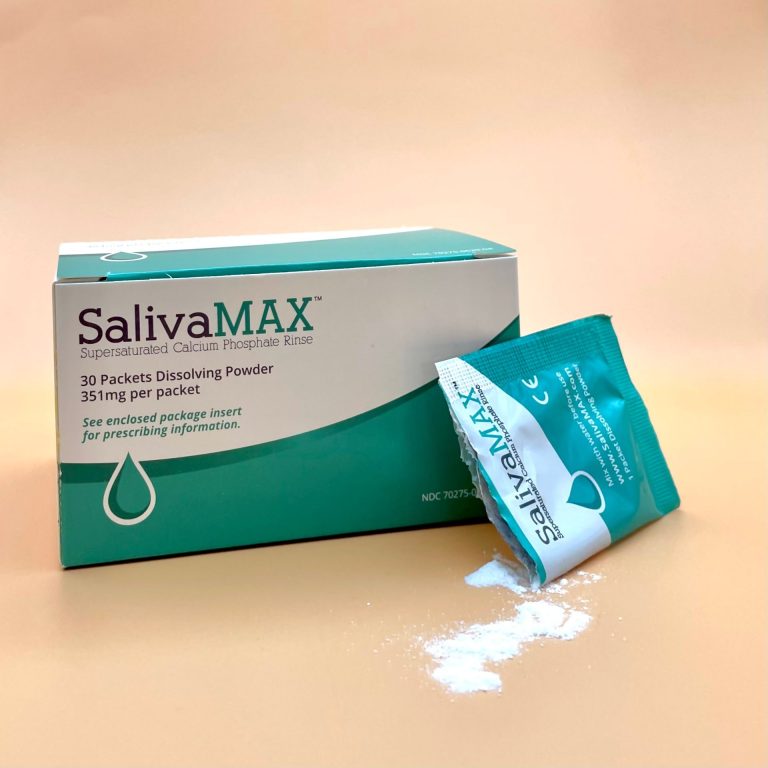
SalivaMAX is in a different category from the other two. It is a prescription-grade rinse that delivers supersaturated calcium and phosphate ions in a chemistry close to natural saliva. When you swish, the rinse releases minerals that buffer acid, remineralize enamel, and protect the soft tissues. It does not just feel wet — it actively repairs the damage dry mouth causes.
For patients losing the cavity battle, this is the only OTC product I know that addresses the root chemistry problem rather than the symptom. The data on supersaturated calcium phosphate rinses is consistent: they reduce mucositis severity in cancer patients, lower cavity risk in xerostomia populations, and improve patient-reported comfort scores.
Biotene: Mild Saliva Substitute Plus Enzyme System
Biotene uses an enzyme system — lactoperoxidase, lactoferrin, and lysozyme — designed to mimic the antibacterial proteins in real saliva. The mouthwash, gel, and spray formulations all aim for symptomatic moisture and modest antimicrobial activity. The pH is neutral, the alcohol-free formula is gentle, and the products are widely available.
The catch is that the moisture is short-lasting and the enzyme effect is modest. Patients with mild dry mouth often find Biotene adequate, but those with moderate to severe symptoms outgrow it within weeks.
Xerostom: Olive Oil Lipid Coating
Xerostom takes a third approach. The active ingredient in their lozenges, gel, and toothpaste is olive oil, which forms a lipid coating on tissues. The lozenges also contain xylitol and betaine, which respectively kill cariogenic bacteria and help cells retain water. The mechanism is comfort-focused: the oil coating reduces friction and feels soothing, while the xylitol provides modest cavity protection.
It is gentle, it works, and patients who like the taste and texture stay with it. The drawback is that olive oil cannot replicate saliva's mineral content, so the cavity-protection ceiling is lower than SalivaMAX.
Not sure which one you need? Two questions, about twenty seconds, and Dr. Saeidi's own decision rules point you to one — with the reason.
Find my matchEvidence: What the Research Actually Shows
I have looked at the published evidence for all three products, and here is the honest summary.
SalivaMAX and other supersaturated calcium phosphate rinses have the strongest evidence base. Multiple randomized controlled trials in head and neck cancer patients show meaningful reductions in mucositis severity and patient pain scores. Cavity-prevention data in xerostomia populations is consistent with the mechanism, and the chemistry is well-characterized.
Biotene has been on the market for decades, with research split between manufacturer-funded studies and independent comparisons. Most studies show improvement in subjective dry mouth symptoms but limited objective change in saliva flow or cavity rates. The honest read: it works for mild cases, struggles in severe ones.
Xerostom's evidence is sparser but generally positive for symptom relief. A handful of European trials show improvement in subjective dryness, and the xylitol in the lozenges has a separate, well-established cavity-prevention literature behind it.

Biotene and Xerostom are drugstore products; these are the prescription-grade options.
Cost Per Day: The Real-World Math
Pricing changes constantly, but, the typical math looks like this for a patient using each product as recommended.
SalivaMAX runs roughly $1.50 to $2.50 per day if used twice daily. The packets are individually dosed, which prevents waste but raises per-day cost. For a high-cavity-risk patient, this is the cheapest insurance policy you can buy — a single new cavity costs $250 minimum, and an active xerostomia patient can develop several per year without protection.
Biotene mouthwash costs roughly $0.40 to $0.80 per day if you use it twice. The gel and spray cost more per use but last longer between applications. For mild dry mouth, this is the cheapest option that delivers real symptomatic relief.
Xerostom is the priciest of the three, often running $2 to $4 per day if you use the full system. The lozenges alone are reasonable, but adding the gel and toothpaste pushes the budget upward. Patients who like the system feel it is worth it; patients who do not switch within a month.
Side-by-Side: Which Patient Should Choose Which Product
The salivamax vs biotene versus Xerostom decision really comes down to the severity and cause of your dry mouth.
Choose SalivaMAX if you have any of the following: Sjögren's syndrome, head and neck radiation history, four or more daily medications with anticholinergic effects, a recent surge in cavities, root caries, or a dentist who has flagged you as high cavity risk. The mineral chemistry actively protects teeth in a way the other two simply cannot.
Choose Biotene if your dry mouth is mild, occasional, or stress-related. If you wake up dry once or twice a week, your cavity history is clean, and you mostly want symptomatic comfort, the drugstore option does the job at a quarter of the cost.
Choose Xerostom if you prefer a lipid-based feel, want a complete daily system you can buy together, and your dry mouth is moderate. The olive-oil base is gentler than alcohol-containing rinses and the lozenges are pleasant for most patients.
Many patients combine products. A common protocol I prescribe: Aquoral spray during the day for fast moisture, SalivaMAX twice daily for mineral protection, and Biotene gel at the bedside for nighttime breakthrough relief. The combination targets symptoms, prevents damage, and keeps the cost-per-night reasonable.
Where Aquoral Fits
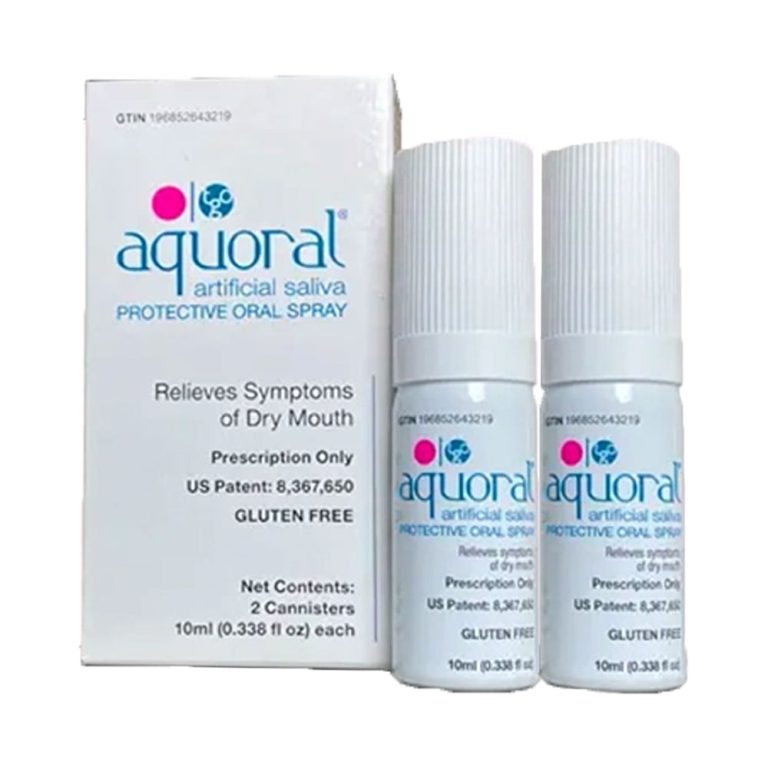
I would also mention Aquoral here, because it is often a better choice than any of the three brands above for daytime symptom control. Its oxidized glycerol triester coating lasts four to six hours per spray, far longer than Biotene mouthwash or Xerostom gel.
For most patients: Aquoral for purse moisture, SalivaMAX for tooth protection. The two work well together.
Not sure which one you need? Two questions, about twenty seconds, and Dr. Saeidi's own decision rules point you to one — with the reason.
Find my matchThe Bottom Line
The salivamax vs biotene versus Xerostom debate is not really about which brand is "best." It is about matching the right tool to the right job. Severe dry mouth and cavity risk demand SalivaMAX. Mild symptomatic dry mouth is fine on Biotene. Moderate cases who want a coherent kit lean toward Xerostom. And many real-world patients use a combination.
For a deeper dive into the full dry mouth treatment framework — including lifestyle changes, prescription options, and the cavity-prevention strategy that goes alongside any of these products — read our complete dentist's guide to dry mouth.
If you are not sure where you fall on the severity spectrum, ask your dentist for a saliva flow check at your next visit. Most patients feel meaningful relief within a week of starting the correct product.
About Dr. Sona Saeidi, DMD
Cofounder of Soothing Dental in San Francisco's Financial District. DMD magna cum laude, Boston University Goldman School of Dental Medicine. Practicing in California since 2011 (license #60566). Member of the American Dental Association, California Dental Association, and San Francisco Dental Society.

This page is educational and is not a diagnosis. Products sold through Soothing Dental may require a prescription; eligibility is confirmed through a brief telehealth screen at checkout.