

Blog › Faster orthodontics
Faster Invisalign & Braces: Do Acceleration Devices Actually Work?
Some of these devices are supported by real research; some are not. Two questions and we'll tell you which one fits your case — the honest evidence review is below.
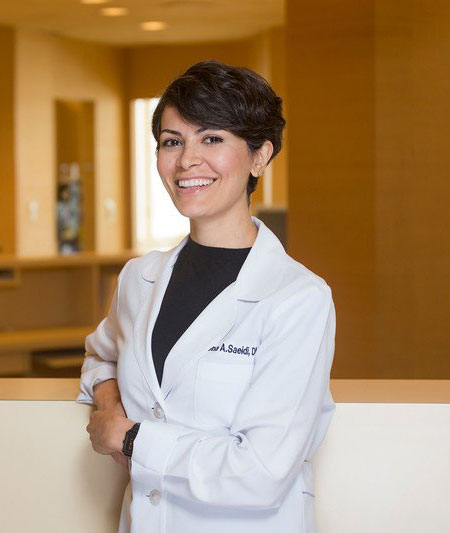
I review every prescription order myself — same judgement I'd use with you in the chair.
Dr. Azar Sona Saeidi, DMDPracticing dentist · Soothing Dental, San Francisco
Find the right acceleration device
Two questions · about 20 seconds
What are you wearing?
Tap all that apply
Uses Dr. Saeidi's own decision rules
What matters most?
Tap any that apply — both devices are a real investment — this is what separates them

Opens store.soothing.dental — our online store, same practice. A licensed dentist reviews the order before it ships.
Call (415) 630-6534 or book a consultation.
The short version
- Three mechanisms exist: vibration, photobiomodulation, and micro-osteoperforation.
- Compliance is the variable that decides whether any of them help.
- Time savings are real but modest — weeks, not months, in most cases.
- Both devices we carry are a real investment at around $950–999.
If you have asked your orthodontist whether orthodontic acceleration can shorten your time in Invisalign or braces, you are not alone. Patients ask me this almost every week. The marketing for VPro5, Orthopulse, AcceleDent, micro-osteoperforations (MOPs), and other devices is enthusiastic — sometimes more enthusiastic than the underlying science. So let us look honestly at what these tools do, what the research actually shows, and which patients tend to benefit.
I am Dr. Sona Saeidi. At my San Francisco practice, I treat aligner cases every day, and I have prescribed orthodontic acceleration devices to selected patients since 2018. This is the evidence-based take I give my own patients before they spend a dollar on any of these systems.
What "Orthodontic Acceleration" Actually Means
Orthodontic acceleration is a category of techniques and devices designed to speed the rate at which teeth move through bone during active treatment with braces or clear aligners. The goal is shorter overall treatment time — say, finishing a 22-month case in 14 to 16 months — without compromising the final result.
Three biological levers drive tooth movement: bone remodeling (osteoclast and osteoblast activity), periodontal ligament response, and the cellular signaling cascade that activates within hours of force application. Acceleration tools target one or more of these pathways. The leading mechanisms today are vibration (mechanotransduction), photobiomodulation (low-level laser/LED light), and direct surgical micro-trauma to alveolar bone.
Worth saying clearly: none of these methods change the biology of bone in a permanent way. They temporarily upregulate the cellular activity that is already happening when teeth move. That matters because it sets a realistic ceiling on how much acceleration is plausible.
Why Patients Care About Speed
Faster Invisalign or braces is not just about vanity. Shorter treatment means fewer office visits, less time wearing aligners 22 hours a day, less risk of decalcification around brackets, and lower cumulative root resorption. For adults running businesses or speaking on stage, six months saved is meaningful. For a teen finishing high school, it can mean braces off before senior portraits.

Both require daily use. The device you will actually use every day is the one that works.
The Three Mechanisms — How Each Device Works
Before we get into specific brands, it helps to understand the three biological pathways the major orthodontic acceleration systems try to exploit. Each works on a different cellular trigger, and the choice of which mechanism fits your case matters more than the brand badge on the device.
1. Vibration (VPro5, AcceleDent)
Vibration devices deliver a pulsing mechanical signal to the teeth and surrounding bone. The patient bites on a mouthpiece for 5 to 20 minutes per day. Frequencies vary: VPro5 (formerly VPro5) operates at 120 Hz, while AcceleDent runs at 30 Hz.
The proposed mechanism is mechanotransduction — cells in the periodontal ligament and alveolar bone sense the vibration and respond by upregulating bone-remodeling signals. There is also evidence that vibration helps aligners "seat" more completely against teeth, which improves the actual force transfer per tray.
Why frequency matters: at lower frequencies, vibration mostly perturbs the periodontal ligament and provides a comfort/pain-modulation effect. At higher frequencies, the mechanical signal couples more efficiently into bone, where the actual remodeling has to happen. This is part of why I lean toward 120 Hz devices over the older 30 Hz designs for aligner cases.
2. Photobiomodulation / Low-Level Laser (Orthopulse)
Photobiomodulation (PBM) uses near-infrared LEDs (typically around 850 nm) to deliver low-level light energy to the gum tissue and underlying bone. Orthopulse is the most prominent PBM device in orthodontics. The patient bites on a horseshoe-shaped intraoral device for 10 minutes per day.
The proposed mechanism is cellular — light at this wavelength is absorbed by mitochondria, increases ATP production, and stimulates osteoclast and osteoblast activity. The same biology underlies PBM use in wound healing, muscle recovery, and joint pain.
Specifically, PBM in the 800–880 nm range increases activity of cytochrome c oxidase in mitochondria, which raises ATP availability inside cells of the periodontal ligament and surrounding bone. Higher ATP supports the energy-hungry processes of osteoclast-mediated resorption on the pressure side of a moving tooth and osteoblast-mediated formation on the tension side. That is the cellular story behind the clinical observation that PBM-supported aligner cases tend to track faster.
3. Micro-Osteoperforations (MOPs / Propel)
MOPs are tiny perforations made through the gum tissue into the alveolar bone, usually with a hand-held device. The micro-injury triggers a regional acceleratory phenomenon (RAP) — a localized increase in bone remodeling that lasts roughly 8 to 12 weeks. MOPs are usually done in-office, not at home.
The biological logic of RAP is real and well-documented in orthopedics — bone heals fastest in the weeks immediately after a controlled injury, with elevated cytokine and remodeling activity in the local zone. The orthodontic question is whether you can sustain that elevated remodeling long enough, and reliably enough, to compress the overall timeline of a multi-month case. The data so far suggests the answer is "only modestly."
Not sure which one you need? Two questions, about twenty seconds, and Dr. Saeidi's own decision rules point you to one — with the reason.
Find my matchWhat the Research Actually Says — Vibration
This is where I have to be careful, because the research on vibration is mixed and the marketing claims are not always defensible.
The early AcceleDent studies (industry-funded) reported faster tooth movement. Subsequent independent randomized trials in 2017 and 2019 — including a well-designed RCT published in the American Journal of Orthodontics and Dentofacial Orthopedics — found no statistically significant difference in tooth movement rate between AcceleDent and a sham device when measured against fixed appliance treatment.
VPro5 (and its predecessor VPro5) has different evidence. The mechanism here is partly tray seating, not just bone remodeling. A 2020 study in the Angle Orthodontist showed that high-frequency vibration improved aligner fit (reduced unseating gaps), which can translate into better tracking and fewer mid-course corrections. That is a real and measurable benefit, even if total treatment time is not always dramatically shortened.
My Read on Vibration
For patients in clear aligners, I think vibration has a reasonable rationale — not so much for "growing bone faster" as for keeping aligners seated and improving force transfer. For patients in fixed braces, the evidence for time savings is weak. I rarely prescribe vibration for traditional braces cases.
Neither is a large time cost — but both only work if the habit sticks.
What the Research Actually Says — Photobiomodulation
The PBM literature is younger but more consistent. Several randomized controlled trials, including work published in The Journal of Clinical Periodontology and Lasers in Medical Science between 2018 and 2023, have shown:
- Roughly 25% to 40% reduction in time to align lower anterior teeth in some studies
- Reduced patient-reported pain in the first 7 days after each aligner change
- No measurable harm to root structure or periodontal tissues
The strongest data comes from cases where Orthopulse or a similar PBM device is used during the initial alignment phase — the first 6 to 9 months — when most of the gross movement happens. Later in treatment, when finishing micro-movements dominate, the marginal benefit narrows.
I have a fuller breakdown of the PBM science in my dedicated piece on photobiomodulation in orthodontics if you want to see the studies cited individually.
Pain Reduction Is Underrated
Patients often focus on speed, but the pain-reduction effect of PBM is, in my opinion, the more reliable benefit. Aligner change-day soreness, which causes some patients to delay switching to the next tray and slow their entire case, is meaningfully reduced. That alone can keep a case on schedule.
What the Research Actually Says — MOPs
MOPs have the most aggressive marketing claims (some clinics promise 50% faster treatment) and the most disappointing independent evidence. Multiple RCTs since 2018 have found that while MOPs do create a regional acceleratory phenomenon biologically, the clinical effect on total treatment time is small — typically 1 to 2 weeks of time savings per perforation cycle, often inside the noise of normal case variability.
MOPs are also invasive, require local anesthesia, and create a small wound. For most adult Invisalign patients I see, the cost-benefit math does not favor MOPs over PBM or vibration.
Brand Comparison: VPro5 vs Orthopulse vs AcceleDent
I have a detailed head-to-head in my VPro5 vs Orthopulse vs AcceleDent comparison, but here is the short version.
VPro5
VPro5 is a 5-minute-per-day high-frequency vibration device (120 Hz). Best for clear aligner patients where tray seating is the limiting factor. Roughly 1/3 the daily commitment of AcceleDent.
Orthopulse
Orthopulse is a 10-minute-per-day PBM device using 850 nm LEDs. Strongest evidence base of the three for actual time reduction during the alignment phase. Works for both aligner and fixed-appliance cases.
AcceleDent
AcceleDent is a 20-minute-per-day vibration device (30 Hz). Older technology, longer daily commitment, and the independent evidence has not held up as well as the early sponsored studies suggested. I rarely recommend it as a first choice
Compliance: The Most Important Variable Nobody Discusses
Every published study on orthodontic acceleration assumes the device is used as prescribed. Real life rarely cooperates that cleanly. A device that is used 4 days a week instead of 7 will not deliver 4/7 of the published benefit — it will deliver something closer to half, because the cellular signaling cascade these tools rely on is sensitive to consistency, not just total dose.
This is one of the strongest reasons I lean toward shorter-daily-commitment devices for most patients. A 5-minute device that is used 95% of days will out-perform a 20-minute device used 60% of days, even if the per-session biology of the longer device is theoretically more potent. Compliance is the limiting factor, not technology.
I tell patients to plan their routine before they buy the device. Pair it with an existing daily habit — morning coffee, evening tooth-brushing, the 10-minute window after dinner. If you cannot honestly imagine doing the device every day for the next 12 to 18 months, the cheaper option is to skip it and accept the standard timeline.
Real-World Results From My Practice
Across the Invisalign cases in my San Francisco practice from 2022, here is roughly what I have seen with patients who are compliant with their acceleration device:
- Average treatment time reduction with Orthopulse: 15% to 20%
- Average treatment time reduction with VPro5: 10% to 15% (mostly from improved tracking, not raw acceleration)
- Pain reduction (patient self-reported): meaningful with both devices, larger with Orthopulse
- Compliance: VPro5 wins because the daily commitment is shorter
These numbers are not from a controlled trial — they are clinical observation. But they line up reasonably with the published literature, and the gap between marketing claims and reality is what I want patients to plan around.
Cost Considerations for Orthodontic Acceleration
Acceleration devices are not cheap. Currently, expect:
- VPro5: roughly $700 to $900
- Orthopulse: roughly $1,200 to $1,800
- AcceleDent (Optima): roughly $800 to $1,000
- MOPs: $250 to $700 per session, sometimes multiple sessions
Insurance generally does not cover any of these. The honest math is: a device that saves you 4 months of treatment time, at $300 per office visit avoided, can pay for itself. A device that saves you 2 weeks usually does not.
Who Should Consider Orthodontic Acceleration?
I prescribe acceleration devices for a fairly narrow group:
- Adults with a meaningful deadline (wedding, graduation, public-facing role change)
- Patients with significant aligner change-day pain that risks compliance
- Cases where I see slow tracking on early aligners and want to improve seating
- Patients who simply value time more than money and want every advantage
I do not prescribe them for patients with mild crowding cases that will finish quickly anyway, or for patients whose case complexity would not be helped by faster bone remodeling — for example, cases that depend on growth, ortho-perio interactions, or restorative coordination.
What Acceleration Cannot Do
It is just as important to set expectations about what these devices will not deliver. Orthodontic acceleration tools cannot:
- Compensate for non-compliance with aligner wear time. If you do not wear your trays 22 hours a day, no device will rescue the case.
- Move teeth in directions the aligners are not designed to move them. Acceleration speeds up the planned movement; it does not change the plan.
- Substitute for refinements when the case veers off track. A device that improves seating still cannot fix a poorly designed treatment plan.
- Eliminate the need for retainers after treatment.
- Make a 3-year complex orthognathic case finish in one year. The biological ceiling is real, and no current technology breaks through it.
I see patients arrive expecting magic. The honest pitch is "modest, real, mechanism-supported time savings, with the biggest gains in the alignment phase, contingent on compliance." That is enough to be worth doing in many cases — but it is not what the glossy ads suggest.
How Acceleration Fits With Invisalign Specifically
If you are considering Invisalign at my practice, the conversation about acceleration usually comes up at the consultation. My typical approach: I plan the case at standard pace first, and if the projected timeline is longer than what the patient wants, we discuss adding a device — most often Orthopulse for new cases, or VPro5 if the limiting factor looks like tracking.
For patients who want a step-by-step daily routine, my guide to using VPro5 with Invisalign covers exactly when in your day to use the device, how to stack the habit with aligner changes, and what to expect in the first month.
Frequently Asked Questions
Do orthodontic acceleration devices actually work?
The honest answer is "sometimes, for some patients, modestly." Photobiomodulation has the strongest evidence for genuine time reduction. Vibration helps mostly with aligner tracking and pain. MOPs have the loudest marketing and the weakest independent data.
Can I use VPro5 and Orthopulse together?
I do not stack them. The biological mechanisms are different but the marginal benefit of a second device on top of the first does not justify the cost or the daily time. Pick the one that fits your case.
Is orthodontic acceleration safe?
Yes, in general. PBM at the wavelengths and intensities used in orthodontic devices has an extremely benign safety profile. Vibration at the relevant frequencies has not shown adverse effects on root structure in the published literature. MOPs are minimally invasive but still surgical, so safety depends on operator skill.
Will acceleration cause my teeth to shift faster after treatment too?
No. Acceleration only works while you are actively wearing the device during treatment. Post-treatment retention is unaffected. Wear your retainer.
Does my orthodontist need to approve the device?
Yes. Any acceleration device should be coordinated with your treating doctor. The device interacts with your treatment plan — aligner change cadence, refinement triggers, and finishing decisions all need to account for the faster movement.
Not sure which one you need? Two questions, about twenty seconds, and Dr. Saeidi's own decision rules point you to one — with the reason.
Find my matchThe Bottom Line on Orthodontic Acceleration
If you are considering an orthodontic acceleration device, my recommendation is: do not buy based on the marketing. Ask your orthodontist whether your specific case is a good candidate, look at the published evidence for the specific device (PBM has the best data), and budget realistically based on the time savings that are plausible — not the time savings that are advertised.
Used in the right cases, these devices can shave meaningful months off treatment and reduce pain enough to keep a case on schedule. Used in the wrong cases, they are expensive accessories. The difference is honest case selection, which is what we try to do at every consultation.
About Dr. Sona Saeidi, DMD
Cofounder of Soothing Dental in San Francisco's Financial District. DMD magna cum laude, Boston University Goldman School of Dental Medicine. Practicing in California since 2011 (license #60566). Member of the American Dental Association, California Dental Association, and San Francisco Dental Society.
This page is educational and is not a diagnosis. Products sold through Soothing Dental may require a prescription; eligibility is confirmed through a brief telehealth screen at checkout.