
Wisdom Teeth Removal in San Francisco
If a wisdom tooth hurts, keeps getting infected or is crowding the teeth next to it, we’ll show you on the X-ray, talk through whether it should come out, and make the removal as comfortable as possible.
Care led by Dr. Azar Sona Saeidi, DMD, who holds a California oral conscious sedation permit (#4081). All PPO insurance accepted · We file the claim for you.
Does your wisdom tooth need to come out?
Wisdom teeth usually arrive between the late teens and the mid-twenties. Some come in straight and cause no trouble. Others don’t have room and stay partly or fully trapped in the gum or bone (impacted).
Reasons to remove it
- Pain or swelling at the back of the jaw
- Repeated gum infections around a partly erupted tooth
- Decay in the wisdom tooth or the molar next to it
- Damage or pressure on the neighboring teeth
- A cyst or other problem seen on the X-ray
When it can stay
A wisdom tooth that has come in fully, is healthy, fits your bite and is easy to clean may not need to come out. We’ll keep an eye on it at your checkups.
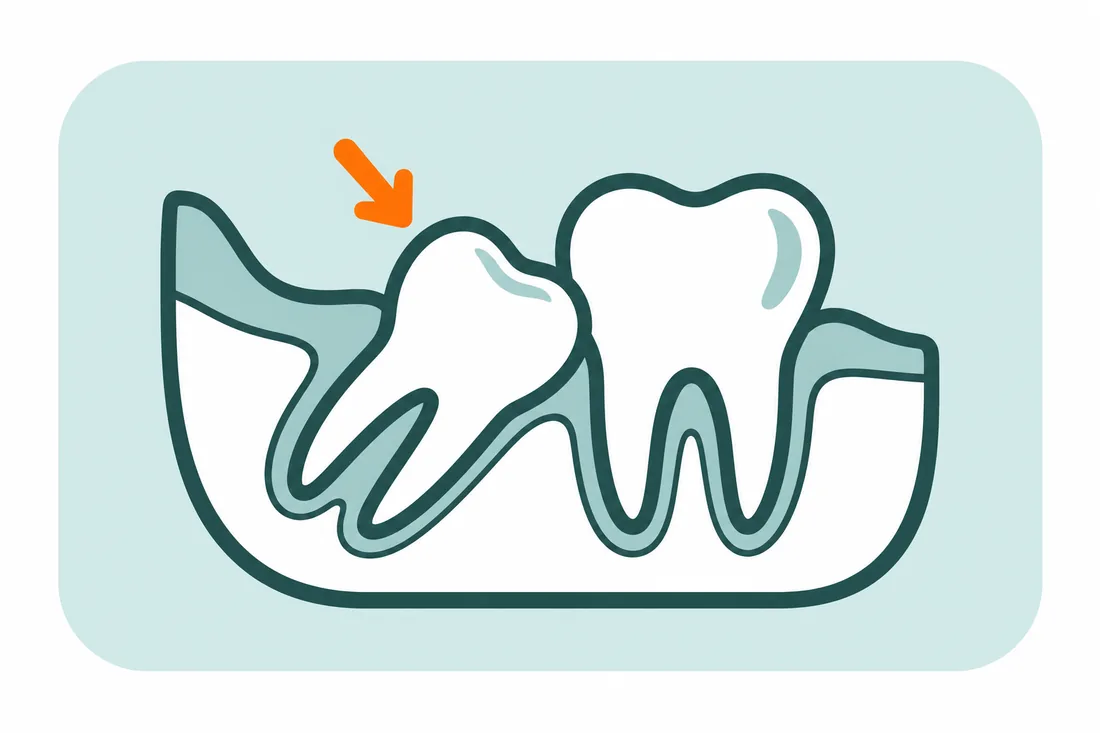
Types of wisdom tooth extraction
Erupted
The tooth is fully through the gum and is removed like any other molar. Local anesthesia is usually enough, and recovery is often a few days.
Soft-tissue impaction
The tooth is partly covered by gum. A small opening in the gum is needed, and a few stitches may be placed. Recovery is usually several days to a week.
Bony impaction
The tooth is still partly or fully inside the jawbone. A little bone is removed and the tooth is often taken out in sections. Recovery usually takes about a week, sometimes longer.
For teeth set in bone, we can use a Piezo ultrasonic instrument, which cuts bone precisely while leaving the soft gum tissue alone. If the site will need a bone graft, for example before a future implant, a healthy extracted tooth can sometimes be processed into graft material for you (dentin autograft). More on tooth extraction and bone grafting.
Staying comfortable
Local anesthesia
Numbs the area while you stay awake. Topical numbing gel goes on before the injection. Enough for most simple extractions.
Nitrous oxide
Takes the edge off within minutes and wears off quickly after the mask comes off, so you can drive yourself home.
Oral conscious sedation
A pill taken before your visit leaves you awake but deeply relaxed. Dr. Saeidi holds a California oral conscious sedation permit (#4081). You’ll need a ride home.
IV sedation
For longer surgical visits or severe anxiety, a sedation specialist comes to our office to give and monitor IV sedation. You’ll need a ride home.
For surgical extractions, long-acting numbing (Exparel) can keep the area comfortable for up to three days, which means less pain medication at home. See all our sedation options.
What to expect
Exam and X-ray
We look at the position of each wisdom tooth, its roots and the nerve nearby. A 3D scan is added when it’s needed.
A written plan
You get a written treatment plan with costs before any work begins, including any sedation fee.
The extraction
We numb the area (and sedate you, if planned), remove the tooth or teeth, and place gauze and any stitches.
Going home
You leave with written aftercare instructions. After oral or IV sedation, an adult needs to take you home.
Who does the work? Dr. Saeidi examines you and plans your extraction. When a case needs it, we have specialists who come to our office, so you don’t have to start over somewhere new.
Aftercare
The first 24 hours
- Bite on gauze for about 30 minutes to help a clot form. If oozing continues, bite on a regular tea bag for 20 minutes.
- Use a cold compress on the outside of the jaw in 20-minute cycles.
- Rest, and take pain medication as directed.
The next few days
- Stick to soft foods like yogurt, eggs and soup.
- No straws for at least three days: the suction can dislodge the clot and cause dry socket.
- Gentle saltwater rinses keep the area clean.
- Don’t smoke while the area heals.
- Call us if pain gets worse after a few days, or if you have a fever or swelling that keeps growing.
Insurance and payment
All PPO insurance accepted · We file the claim for you. We accept all PPO plans. And we cannot bill any HMO plans. If you don’t have a PPO plan, and you’d like to take advantage of our in-house monthly plans, you can subscribe to one of those and save while you’re taking care of your oral health in our office.
For payment plans we work with CareCredit and offer in-house financing on larger cases. More about dental insurance.
Wisdom teeth questions
Do all four wisdom teeth need to come out?
Not necessarily. We recommend removing the teeth that are causing problems or are likely to. Some patients choose to have all four removed in one visit so they only recover once.
Will I be asleep?
Not with local anesthesia, nitrous oxide or oral sedation: you stay awake but comfortable. IV sedation is deeper, and most patients remember little of the procedure.
How long is recovery?
Often a few days for a simple extraction and about a week for an impacted tooth. Swelling usually peaks around the second day.
What is dry socket?
A painful condition where the blood clot in the socket is lost too early. Avoiding straws, smoking and hard spitting for the first few days lowers the risk. If pain gets worse instead of better after a few days, call us.
Can I drive myself home?
After local anesthesia or nitrous oxide, yes. After oral or IV sedation, an adult needs to take you home.
My wisdom tooth hurts. Is it urgent?
Swelling, fever or trouble opening your mouth needs prompt care. We reserve same-day urgent visits for new patients with dental pain. Call (415) 989-3953 for the earliest available time.
Related
Wisdom tooth bothering you?
Book a visit and we’ll take a look. Open Monday to Friday, 8 am to 5 pm, at 450 Sutter Street near Union Square. All PPO insurance accepted · We file the claim for you.